Every one of them looks back at you.
Not designs — presences. Each begins as a sketch and becomes someone with a gaze, a history, a story waiting to be told.
Drag the reel to meet them.
Technical perfection is easy to reach and easy to forget. I would rather a character be slightly imperfect and completely alive.
Where most digital character work chases technical perfection — clean surfaces, precise renders, plastic finish — Luminous Realism goes the other way. Texture is painterly and visible, like brushwork left deliberately unresolved. Colour is saturated and emotional rather than accurate. Faces are built around the eyes, because the eyes are where a character stops being a design and starts being a person.
The style works across registers: photoreal film characters, stylised animation heroes, creatures and companions. What holds them together is not a look but a sensibility — restraint, depth, and an exact feeling for half-tone.
Every character begins as a sketch and ends as something that can be handed to a production team. When a project needs them, turnarounds, expression sheets and colour keys follow. Design that is beautiful is only half the job. Design that a crew can build from is the other half.
- Painterly texture over plastic perfectionVisible surface, brushwork, imperfection kept on purpose.
- Luminous cinematic lightLight as emotion, not illumination.
- Saturated, emotional colourColour chosen for feeling, not accuracy.
- Expressive faces that carry the storyBuilt around the eyes.
- Atmospheric depthCharacters live in air, not on backdrops.
Concept → character → final design. Every character begins as a sketch and ends as someone who could carry a story.
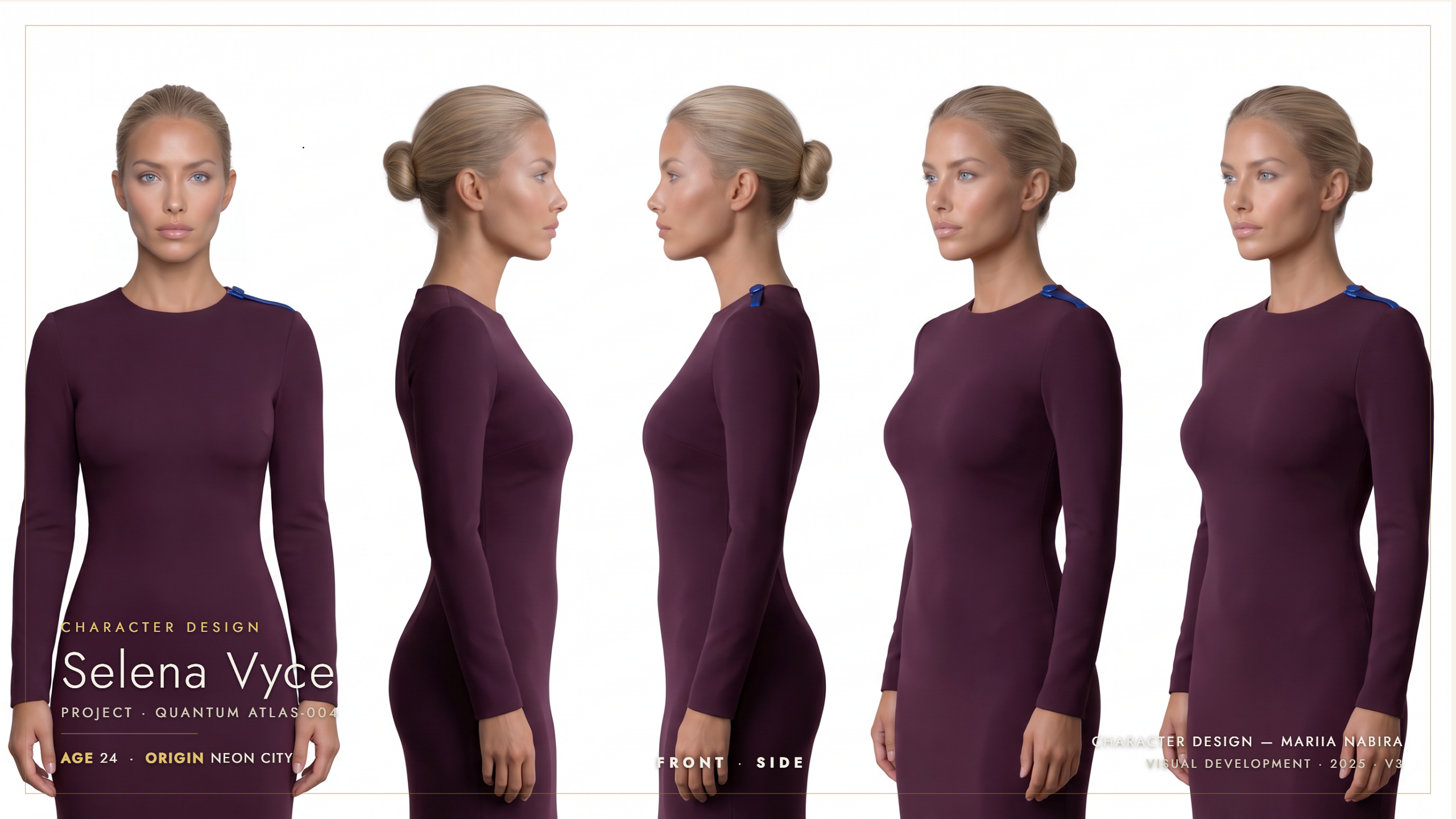
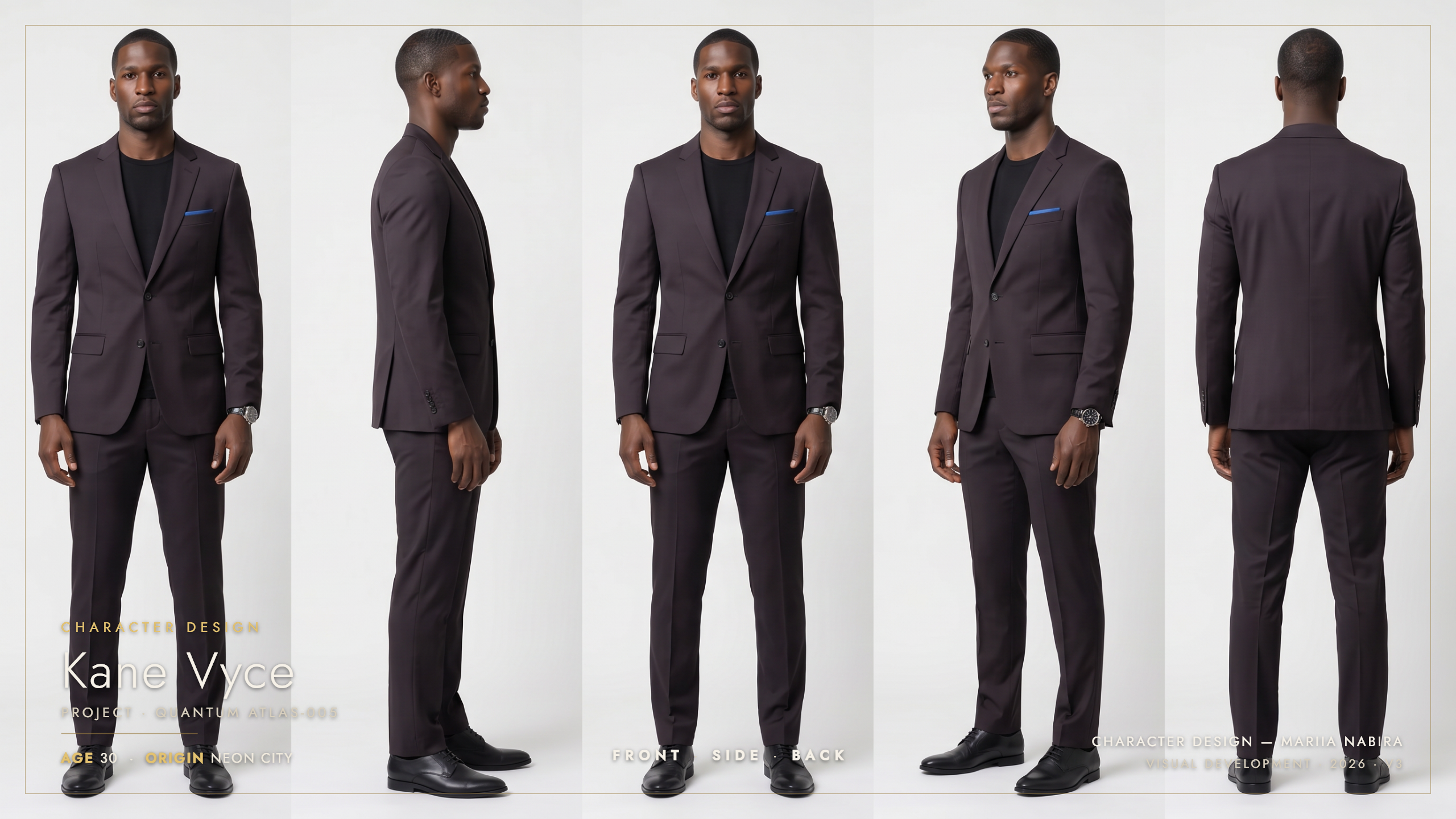
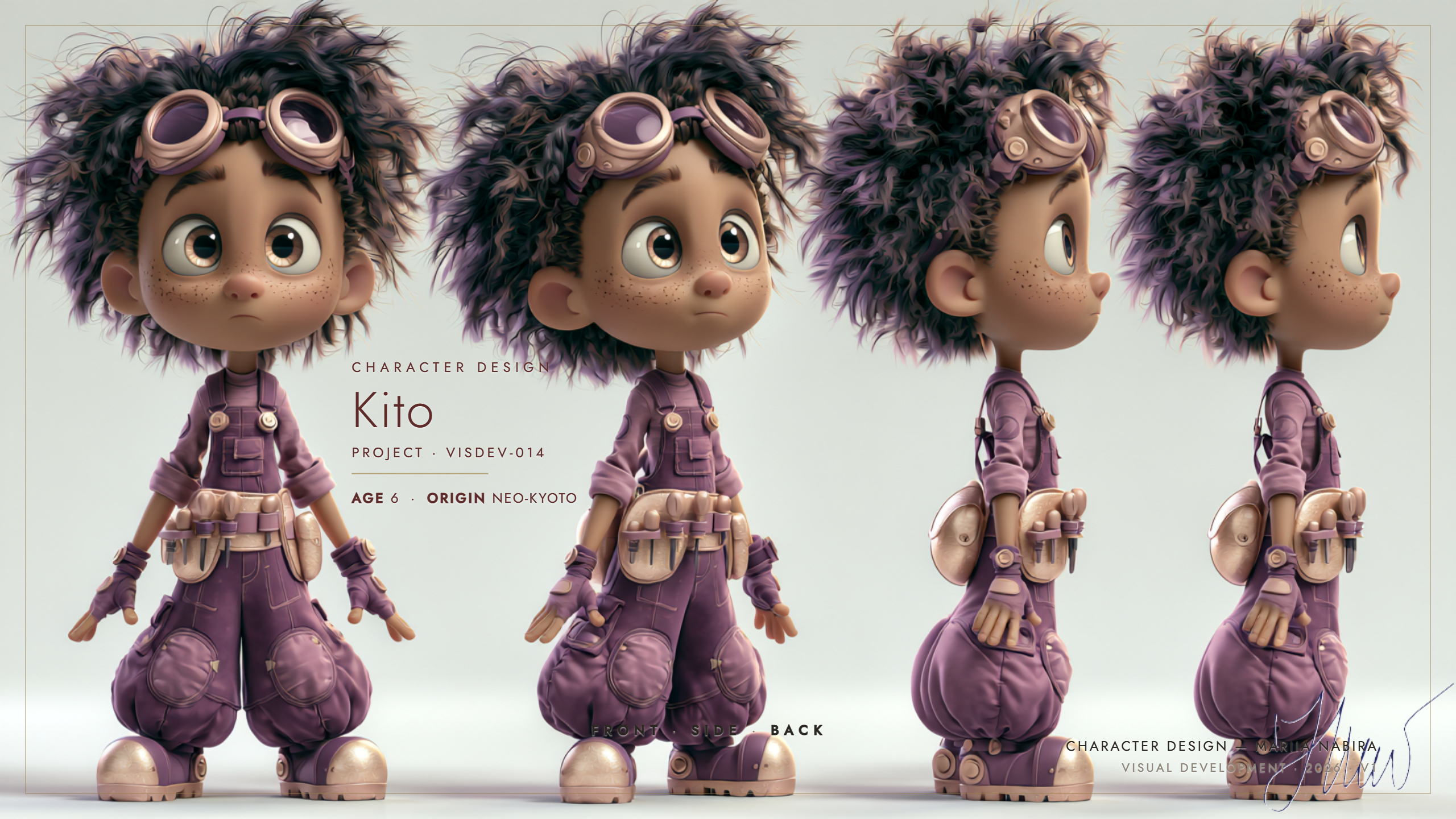
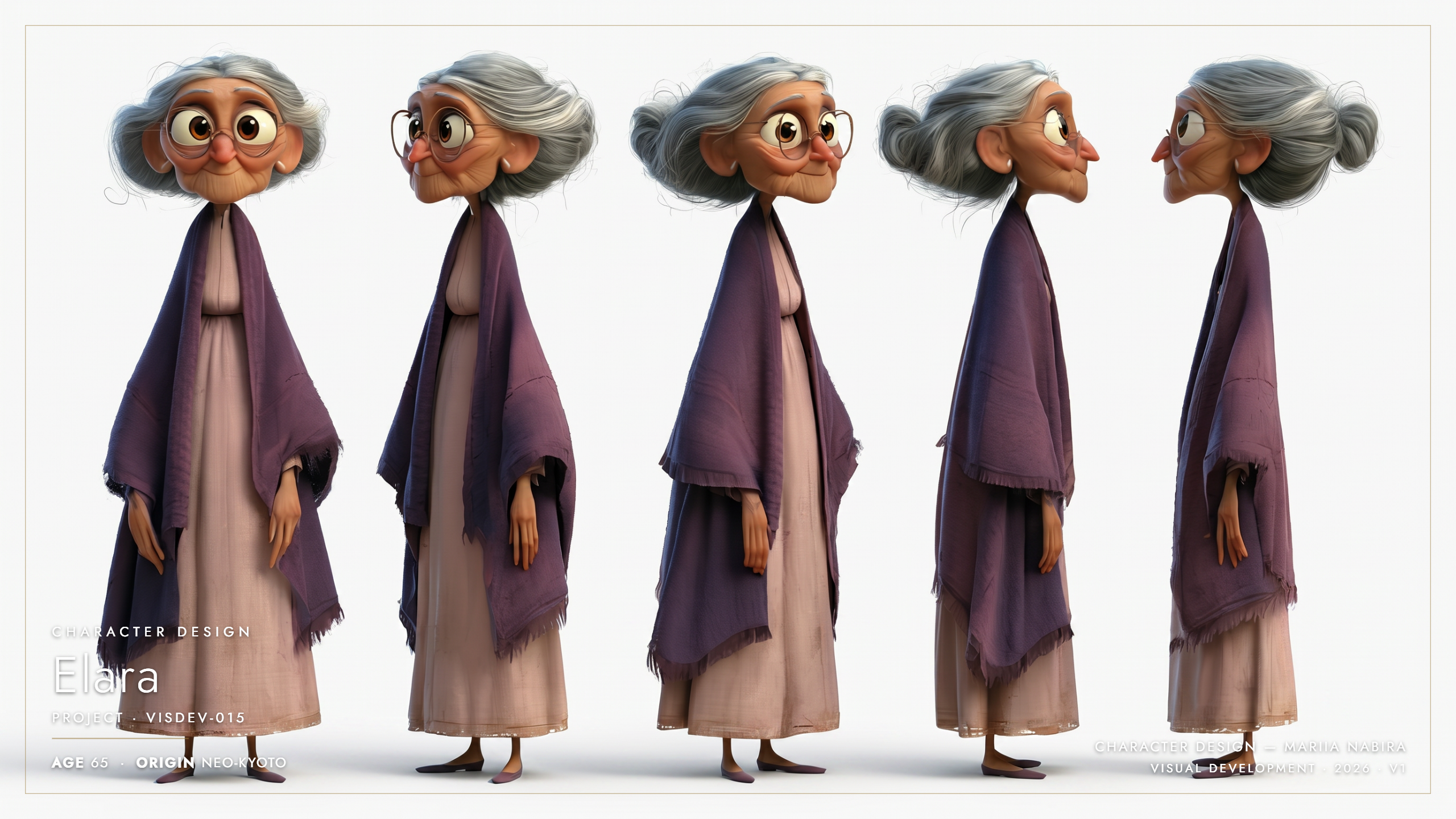
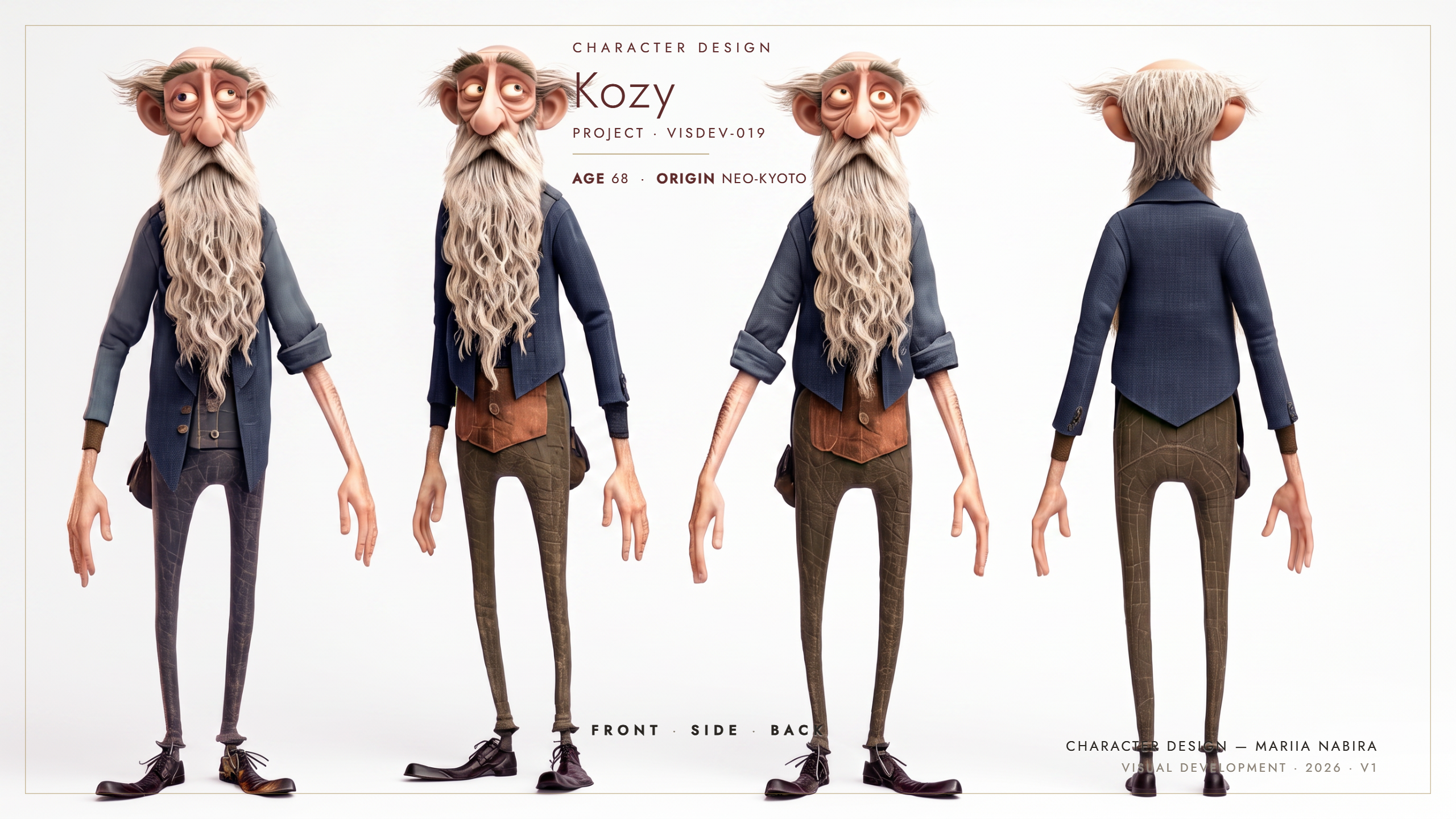
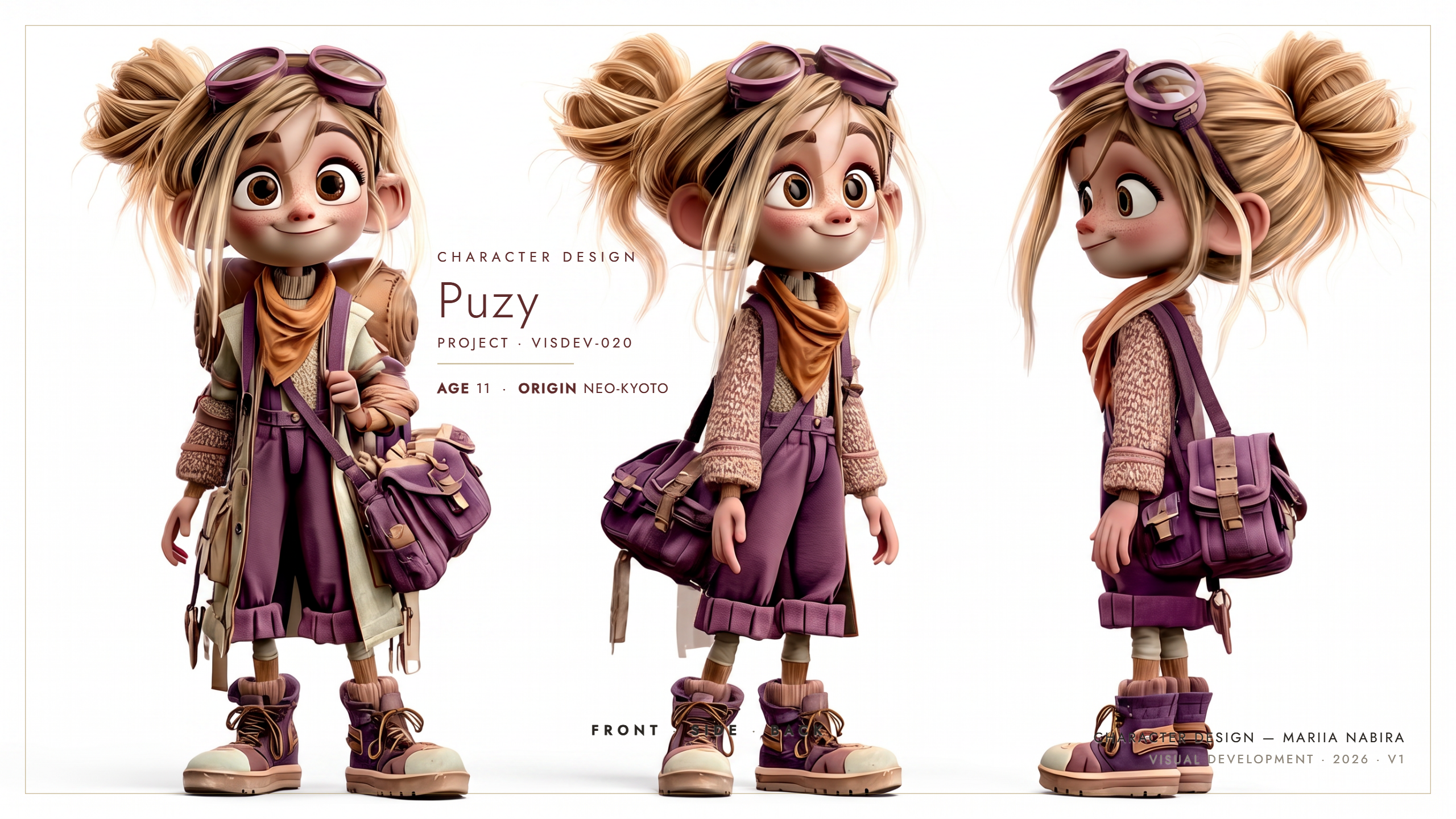
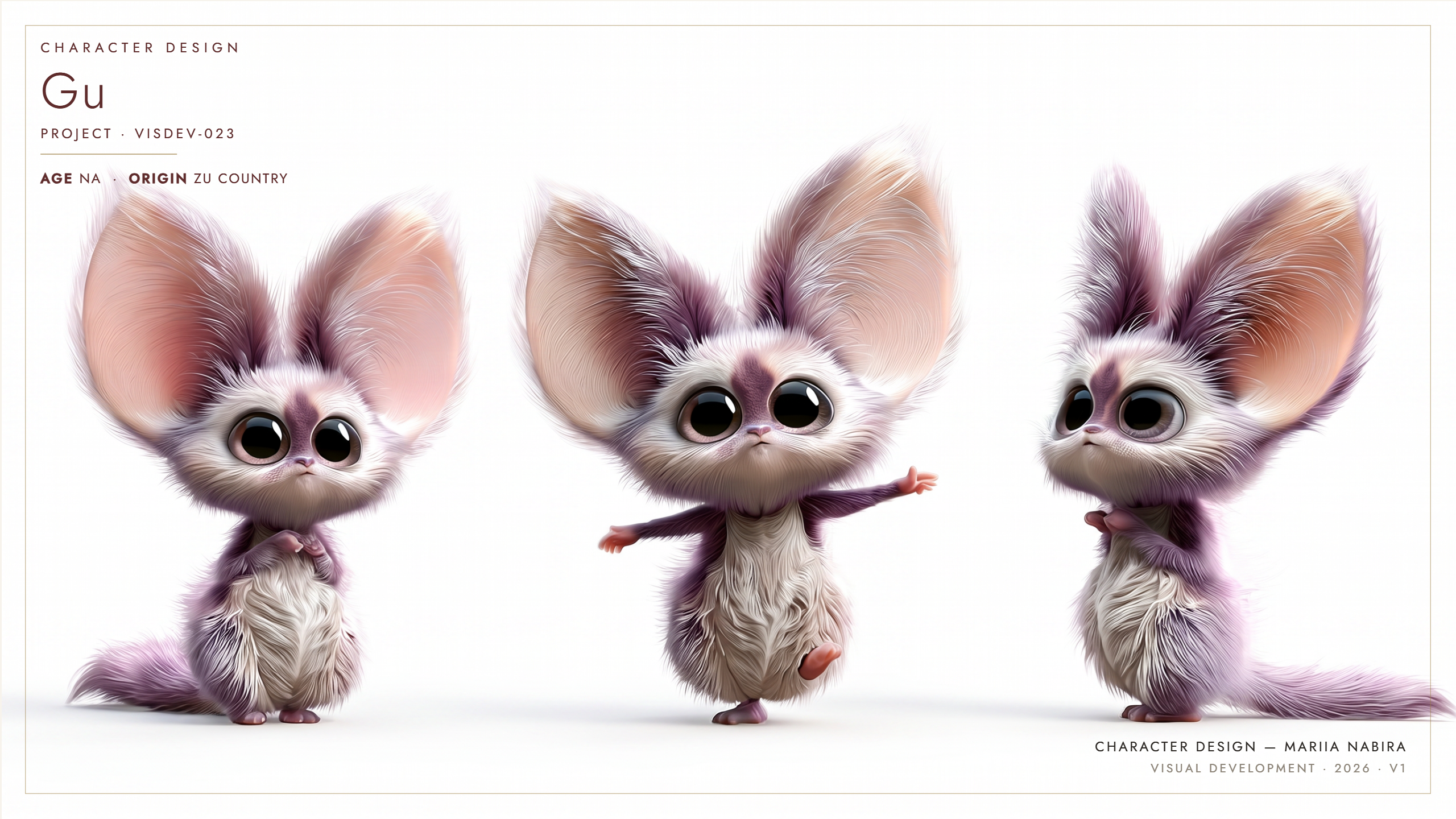
Character design for film and animation: original designs, production-ready model sheets, expression sheets and motion studies.